From visibility to responsibility: why allyship still matters for women in Highways

Lauren SeBlonka, Innovation Business Partner
08 April 2026
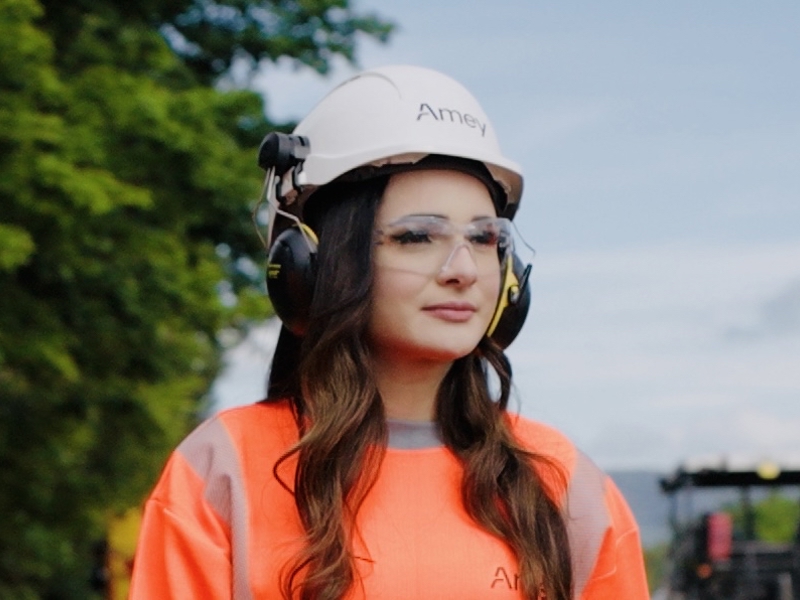
Woman wearing PPE looking into the distance. She is standing outside and a tree and body of water are visible in the background.
Speak to an expert about your challenge

Related markets and services

When I was invited to speak at the PIARC (World Road Association) Winter Road Congress’ Gender Inclusion and Diversity Reception, and later to appear on a podcast for the National Asphalt Pavement Association in the US – my first reaction was not confidence. It was doubt.

At the time, I had been working in the highways and infrastructure sector for 3 years, in my role as Innovation Business Partner, focusing on innovation and decarbonisation in Highways. I am still early in my career, and I do not come from a traditional engineering background. Yet suddenly, I found myself contributing to conversations alongside women whose careers span decades – senior engineers, technical specialists and industry leaders who have shaped policy, delivered nationally significant programmes, and built their careers in a sector where female representation was once far rarer than it is today.

Who was I to share a stage with women whose careers I deeply admire? What could I offer to a conversation shaped by decades of experience, when I am still early in mine? And why would anyone want to hear from a non engineer working in a sector that has historically defined credibility so narrowly?

Alongside that doubt, however, was something else: pride. And a growing sense of responsibility. Because being visible in those moments forced me to reflect not just on my own journey, but on the conditions that made it possible – and the people who quietly shaped it along the way.

That reflection led me to one conclusion: progress on gender inclusion is real. But it has never been achieved by women alone. It has depended, and still depends, on allyship.

Progress is real, but the work is unfinished

The highways and infrastructure sector is changing fast. We are being asked to decarbonise at pace, adapt to a changing climate, embrace digital transformation, and deliver greater social value — all while maintaining the assets that millions of people rely on every day.

Meeting those challenges requires more than new materials or technologies. It requires new perspectives, inclusive cultures and a workforce that reflects the communities we serve.

Yet highways remain one of the most male dominated sectors in the economy. In the UK, women still only make up around 15 per cent of the construction workforce. While representation is improving, retention and progression remain persistent challenges, particularly at mid and senior career levels.

Too often, the focus remains on attracting women into the industry, without asking a harder question: is the industry truly set up for them to stay and succeed? Industry research consistently shows that women are more likely to leave not because of a lack of capability or ambition, but because of culture, lack of sponsorship, and a sense that they do not belong or are not supported to progress.

This is why allyship still matters. Not as a slogan or a programme, but as a practical, everyday intervention that shapes confidence, opportunity and retention.

At Amey, we believe gender inclusion is not a “nice to have”. It is fundamental to building a resilient, innovative and sustainable business, and to delivering infrastructure that works for everyone. That belief is backed by structure: employee led networks such as Women@Amey, and forums that bring lived experience, allies and leaders together to influence decisions. But belief and policy alone are not enough. Inclusion is shaped not by statements or strategies, but by everyday behaviours, decisions and power dynamics – and by whether people at all levels feel empowered to act as allies.

Looking back: the role allyship played in my career

My route into highways was not conventional. I moved to Scotland alone at 18, studied Sociology to better understand how inequality shapes lived experience, and began my career in the charity sector, leading innovation in social impact evaluation. Roads were never part of the plan.

What drew me to Amey, and to infrastructure more broadly, was scale. The idea that decisions made here affect millions of people every day. That infrastructure shapes access to opportunity, safety, economic growth and community wellbeing.

Despite having no technical background, I was welcomed. Early in my time at Amey, I joined Women@Amey, our employee led female leadership development network. Over 18 months, I connected with women across the business, built a support network, and gained something that is often underestimated: perspective. It helped me recognise that many of the challenges I was experiencing were not personal shortcomings, but patterns shared by women across the sector.

Those challenges were real. As I progressed, I encountered moments that will be familiar to many women in highways: needing to work harder to be heard in senior rooms, assumptions about what I would or wouldn’t understand, and subtle signals about who was considered a “typical” voice in the industry. This is often described as imposter syndrome, but in reality it is frequently a rational response to repeated cues about belonging.

What made the difference was allyship — and this is where my own experience reinforces why it is still needed.

Alongside the support of Women@Amey, I experienced the impact of active allyship. This did not only come from senior leaders, but from colleagues across the business who used their influence, formal or informal, deliberately. They amplified my voice when I was spoken over. They sponsored me into opportunities I would not have put myself forward for. I was consistently given opportunities early in my time at Amey to present to Senior Leadership Teams, and to the Transport Infrastructure Executive Team, shaping our decarbonisation strategy with my perspective — reinforcing that my voice was valued.

My first People Manager at Amey quickly gave me credit for my work, invited me into wider strategic discussions, and challenged situations where I was expected to pick up administrative work instead of contributing meaningfully. Those actions directly countered the pressures that can erode confidence and stall progression, and they are a clear example of allyship in practice, not just in principle.

That distinction matters. Mentorship offers advice; sponsorship creates access. Without it, talent, particularly female talent, is far more likely to stall — not because it lacks ability, but because the conditions to thrive are not consistently in place.

Why allyship is a shared responsibility

What gives me hope is allyship that is both visible and structured — leadership that is willing to listen, challenge and act, and organisations that treat allyship as a strategic capability rather than an individual choice. Senior leaders play a critical role in setting expectations and modelling behaviour, but allyship does not sit with leadership alone. It must be enabled and reinforced across the organisation, showing up when colleagues speak up in meetings, challenge assumptions, and use their voice to create space for others.

At Amey, our People Strategy is clear in its intent: to attract, develop and retain diverse talent, build inclusive leadership capability, and create a culture where people can perform at their best — supported by mechanisms that connect employee insight, allies and leaders to drive change collectively. This includes investing in employee led networks, creating formal routes for lived experience to influence decisions, and holding leaders accountable for the cultures they create. My own experience reflects how that approach translates into real opportunity when it is lived day to day. Supporting gender inclusion is not separate from this strategy; it is fundamental to it.

For organisations serious about gender inclusion, the lesson is clear: allyship cannot rely on goodwill alone. It needs structure, sponsorship, and accountability — embedded into how decisions are made, how talent is developed, and how culture is measured.

Supporting women in highways is not just about fairness. It is about sustainability, innovation and resilience. Diverse perspectives strengthen decision making. Inclusive cultures retain talent. And across the industry, organisations that fail to approach allyship with the same rigour as any other strategic priority will continue to lose skilled people they cannot afford to replace.

A call to action – for all of us

To young women entering or navigating highways: find strength in one another. Share what works. Do not gatekeep survival strategies. Lean on those ahead of you and reach back when you can. You should not have to navigate this industry alone, and your experiences are valid.

To leaders, colleagues and allies at every level: recognise the influence you hold. Look honestly at the early  and mid career women in your teams. Are you actively sponsoring their growth, or allowing structural and cultural barriers to quietly push them out?

When someone calls out poor behaviour, do you see a problem, or a leader protecting your organisation’s future?

At Amey, our commitment to gender inclusion is ongoing. It is reflected not only in programmes and policies, but in everyday behaviours, leadership accountability, and the courage to challenge what no longer serves us. That combination – policy, practice and people – is what turns allyship from intent into impact.

If we are serious about building infrastructure that serves everyone, then we must continue building an industry shaped by everyone too.

Speak to an expert about your challenge.