Celebrating 200 years of rail: legacy, leadership and the road ahead

James Holmes, Sector Director, Rail
23 December 2025
Rail track
Speak to an expert about your challenge

Related markets and services

As 2025 marks 200 years of rail for Britain, it is hard to overstate the impact this industry has had on our nation. From the first steam-powered journeys on the Stockton & Darlington Railway to today’s digital, decarbonised networks, rail has been a story of constant reinvention, shaping communities, driving economic growth and connecting people like never before.
Today, we stand at another defining moment. Government ambitions for rail are among the boldest in generations. Programmes such as HS2, Northern Powerhouse Rail and East West Rail are not simply about faster journeys; they are about unlocking regional prosperity, levelling up opportunities and accelerating progress towards Net Zero. The creation of Great British Railways signals a shift towards a simpler, greener, more integrated network, one that responds to what passengers and communities truly need.

Success is measured on whether trains run reliably, safely and on time.

A unique entry and enduring impact

Amey entered the rail industry in the late 1990s during one of its most transformative periods, the devolution of British Rail. From the outset, we approached rail differently to many of our peers. Rather than focusing on a single discipline, we brought an end-to-end capability that spanned design, construction, operation and maintenance. This integrated perspective gave us a unique vantage point and set a standard for how we deliver today: learning from every project and applying those lessons to the next.

As the industry evolved, so did we. One of the most defining shifts, the move from intuition-led decisions to data-driven insight, changed everything. Today, structured data underpins how assets are designed, maintained and operated, improving reliability and resilience across the network. Equally transformative was the adoption of systems thinking, recognising that rail is part of a wider transport ecosystem, rather than a standalone. These changes shaped Amey’s approach and reinforced our commitment to outcome-based delivery.

Innovation has also redefined how people work. Advances in digital connectivity and collaborative tools mean expertise can be shared across regions without teams being physically co-located, enabling faster, more consistent delivery. And perhaps most importantly, the industry has shifted towards being passenger-focused. Now success is measured not by engineering outputs but by whether trains run reliably, safely and on time, a principle that strongly influences how Amey delivers today.

We are modernising signalling in a way that is scalable, sustainable and ready for the future.

Operational excellence & innovation today

Our real value is in constant evolution, learning from one project and doing the next one better.

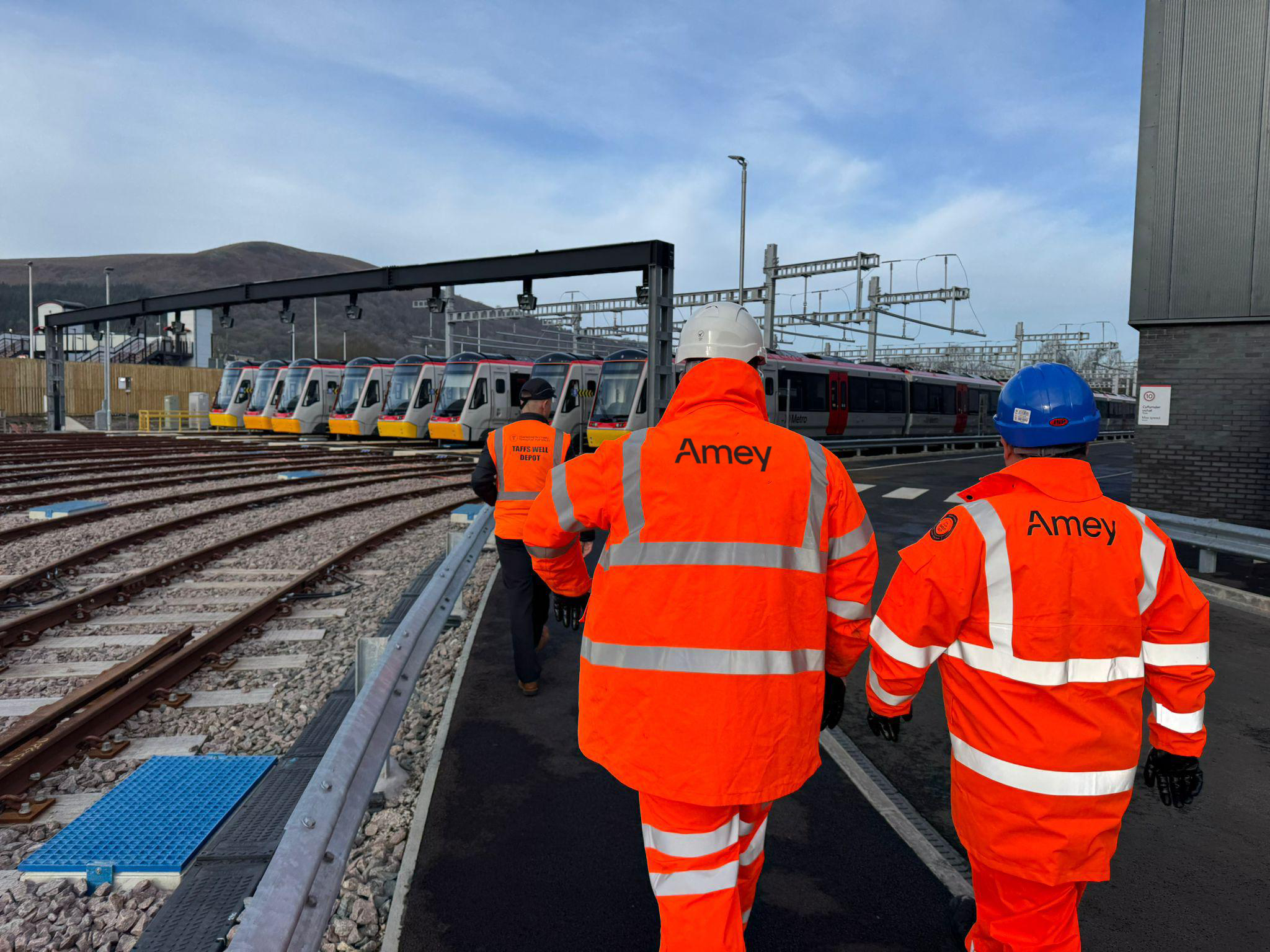
Amey’s approach to delivery is rooted in outcome-based thinking, not rigid specifications. As we often say: “We were not given a box to build; we were given outcomes to achieve.” This philosophy came to life on the Core Valley Lines and South Wales Metro programme, where objectives such as regular, predictable timetables, decarbonisation and improved social mobility guided every decision. By focusing on outcomes, teams were free to design the right solution rather than simply follow a fixed blueprint – unlocking efficiencies, reducing disruption and delivering substantial cost and carbon savings, including £300 million in electrification savings.

two men in PPE, on a rail track
Our outcome-based approach to delivery came to life on the Core Valley Lines and South Wales Metro programme.

These programmes have been key contributors to the sector’s progress, setting new standards for how rail projects can deliver social, environmental and economic value. They demonstrate what is possible when innovation and integration come together.

Beyond major programmes, Amey is driving change through cutting-edge technology. Tessera, our new modular, plug-and-play digital signalling system, is designed to upgrade and future-proof rail infrastructure across the UK and globally. Tessera delivers seamless integration, enhanced safety and operational efficiency, modernising networks without interrupting day-to-day operations. It tackles one of the industry’s biggest challenges, the cost and complexity of signalling, with a solution that is cheaper, lower carbon, easier to deploy and technology agnostic. By introducing Tessera, Amey is helping to modernise signalling in a way that is scalable, sustainable and ready for the future.

Sustainability is not just a goal; it is how we work.

Embedding sustainability in everything we do

For Amey, sustainability is not an add-on; it is embedded in every decision we make. Our work is guided by a robust ESG strategy that sets clear direction, builds capability and ensures sustainable thinking is part of everyday delivery. This commitment aligns closely with the government’s Net Zero ambitions, because every rail project we deliver is, fundamentally, a decarbonisation project.

Rail is one of the most effective ways to cut emissions. By making the network more reliable and better connected, we help people choose trains over cars and enable freight to move from lorries to rail. That shift reduces congestion, lowers carbon and makes transport more sustainable for everyone.

Of course, building greener railways means making smart choices. Electrification, for example, uses materials like copper that have a carbon footprint, but the long-term benefits far outweigh the initial impact. As we often say: “It is about spending carbon now to save far more carbon in the long term.”

We are also finding practical ways to reduce waste and disruption. Tessera uses fewer materials and lasts longer. Hybrid electrification means fewer wires and less concrete. And on projects like Core Valley Lines, we avoided unnecessary bridge demolitions, cutting carbon and minimising disruption for local communities.

Sustainability is not just a goal; it is how we work. By combining clear strategy with practical innovation, Amey is helping rail become the backbone of a low-carbon transport system, delivering benefits for people, places and the planet.

Opportunity in rail should never be limited by background or circumstance.

Skills, inclusion and the reality of today’s workforce

The employment side of the rail sector looks very different from where it was 200 years ago. Historically, this was an industry dominated by men, with unsociable hours, complex training requirements and inconsistent work patterns that made it hard for many to join and stay. While progress has been made, the industry still faces real challenges: barriers to entry remain high for ethnic minorities, women and those from lower-income backgrounds.

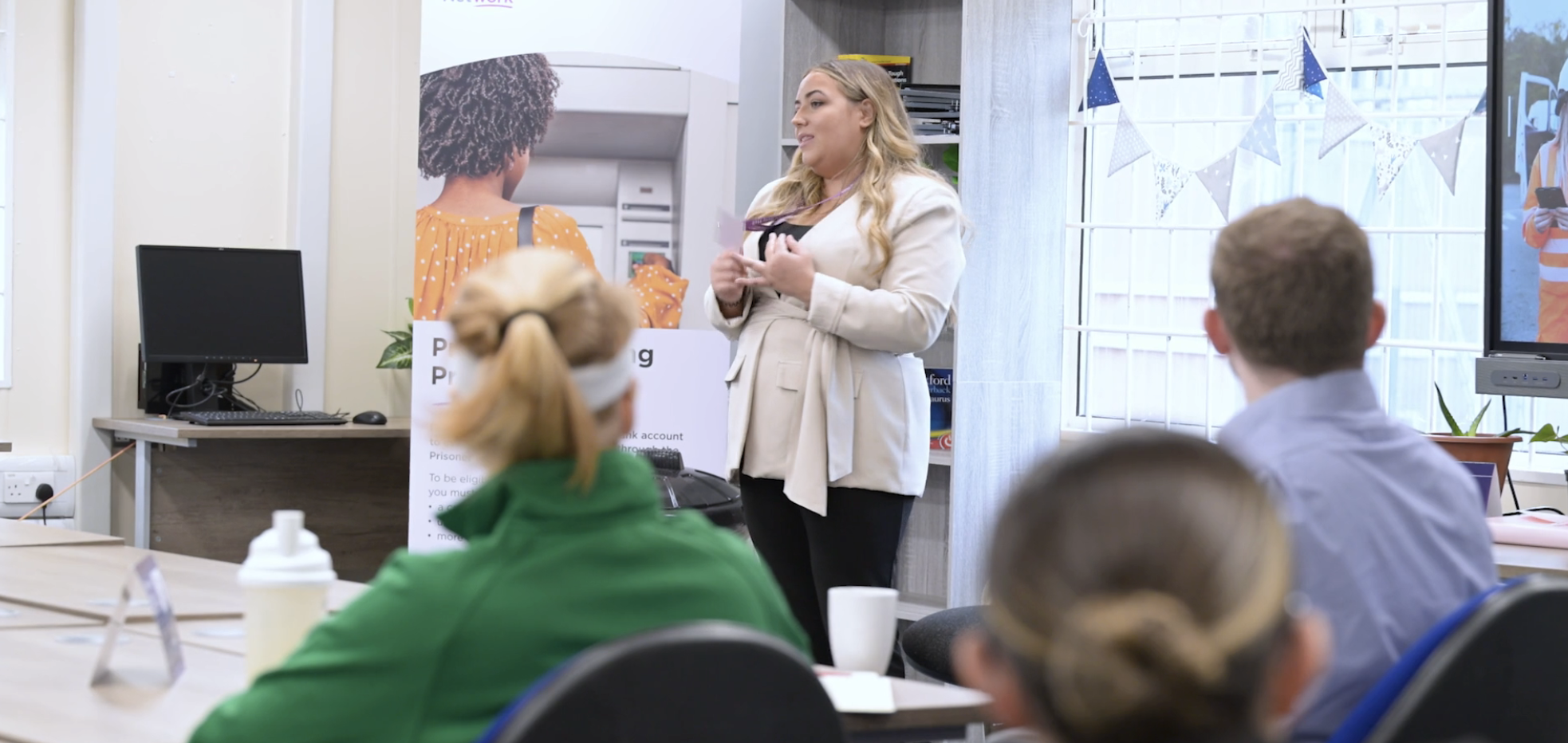
At Amey, we understand that the future of rail depends on people, and that means creating pathways into the sector. We invest in apprenticeships, graduate programmes and inclusive recruitment practices, and we use our voice to push for sector-wide reform. One example is our Journey to Work (JtW) initiative – a collaborative programme designed to support those furthest from the labour market. JtW showcases real vacancies and offers clear paths to employment and career growth.

Samantha Heron, Resource and Operations Manager at Amey, speaks to participants at a Journey to Work employability session in HMP New Hall.
Our Journey to Work initiative supports those furthest from the labour market.

However, inclusion is not only about recruitment, but also about how work is structured. Sometimes small changes make a big difference, like holding training sessions at lunchtime so people do not have to choose between work and childcare. We are rethinking working patterns, creating flexible training formats and making environments more accessible.

We are honest about the fact that progress takes time, but our commitment is clear: opportunity in rail should never be limited by background or circumstance. By breaking down barriers and building a more diverse workforce, we are helping create a rail industry that reflects the communities it serves.

We will continue to act as an integrator and enabler.

Looking ahead: the next 200 years

Imagine a railway where people can set off knowing their journey will be comfortable, safe and reliable — where trains arrive on time, connections are seamless, and travel is stress-free. That is the future we should all be working towards: a network that is integrated, inclusive and sustainable, delivering for passengers and communities every single day.

To make that vision a reality, certainty is critical. Stable funding and clear pipelines give the industry confidence to invest in skills, innovation and sustainability. Government must provide long-term clarity and the correct Private Finance Initiatives (PFIs) to enable faster decision-making and allow projects to be fast-tracked. Without that consistency, progress stalls and opportunities are lost, from decarbonisation initiatives to digital upgrades and skills programmes that prepare the workforce for the future.

Amey’s role in this future is clear. We will continue to act as an integrator and enabler, connecting systems, people and outcomes to deliver infrastructure that is customer-focused, resilient and low-carbon.

By championing outcome-based delivery, digital innovation and whole-life thinking, Amey can help the industry move faster, reduce cost and carbon, and create railways that truly serve communities and the economy.

Rail is not just heritage, it is a platform for innovation, inclusion and sustainability. As we look ahead to the next 200 years, Amey stands ready to lead that journey, ensuring the railway continues to deliver for people, places and the planet.

Speak to an expert about your challenge.